1

Warm up
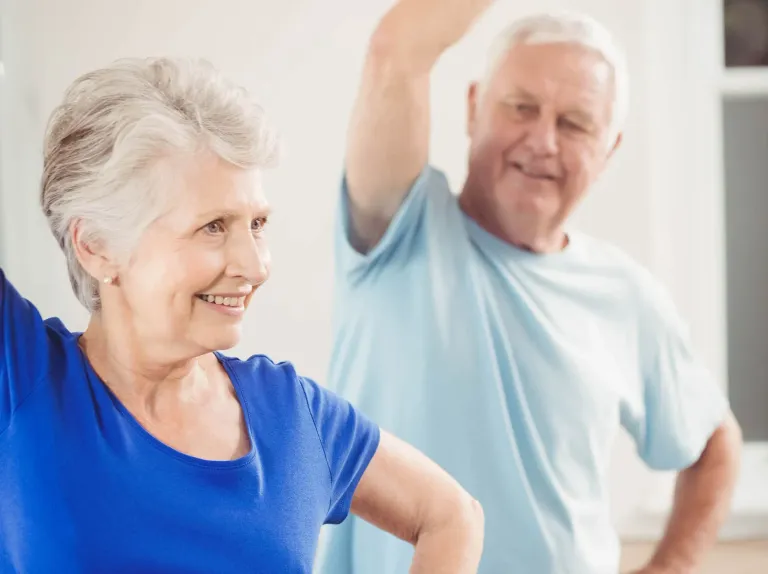
There are so many benefits to a warm up. It gently loosens your joints, activates the muscles, and increases your heart rate and circulation. All of these combined effects help to prevent injury so you can exercise safely.
safe is your exercise program towards healthy aging
It’s a fact that we are all living longer and that means finding ways to maintain our health, mobility and independence is essential. One key area to promoting healthy aging is participating in an exercise program. safe – senior adult fitness exercises – has been specifically designed for you.
Developed by the Geriatric Division of Medicine at the McGill University Health Centre (MUHC), safe is a series of exercise videos with one goal to improve your quality of life. The prevention of falls, as well as overcoming the fear of falling, is a big part of that. safe will help make you feel stronger and more confident.
Click on the video to the right featuring Dr. José A. Morais, Director, Division of Geriatric Medicine to learn more about safe.
Before you start, be sure to click on the safe recommendations section. These important tips will help prepare you for your exercise session.
Go to Start Exercising to access the videos.
Always begin each session with the warm up section. This prepares your body for the exercises.
Start with Level 1 in each of the sections. Go at your own pace. You can always press the pause button when you need to rest.
Repeat the Level l series until you feel completely comfortable and then move on to Level 2. Proceed in this way until you reach Level 4.
Every safe level is comprised of 5 videos, each one targeting a specific component of exercise. Together, they form a well-balanced program designed to maintain and increase your overall fitness.
There are so many benefits to a warm up. It gently loosens your joints, activates the muscles, and increases your heart rate and circulation. All of these combined effects help to prevent injury so you can exercise safely.

Growing older is not a choice, but you can decide to grow stronger. Strength is a cornerstone to building muscle… and building confidence. Getting up from your chair, walking more steadily and daily activities will be easier once you strengthen your ankles, knees and hips.

Many things contribute to diminished balance such as inactivity, impaired vision and weakened bones. Balance-focused exercises help improve coordination and stability and foster an increased sense of resilience and control. This can lessen your fear of falling.

Improving your flexibility will help relieve joint stiffness as well as increase your range of motion. You’ll find that performing tasks such as dressing, reaching or bending won’t be as uncomfortable and painful. safe’s low-impact flexibility exercises aim to enhance your general mobility.

No matter your age, cardiovascular health remains very important. Getting your heart rate up even slightly makes your lungs and heart function more efficiently. And, with boosted stamina, you’ll be able to do the things you like longer. This can positively impact your mood, autonomy and longevity.
safe is an accessible and easy-to-use resource to help seniors maintain optimal health, independence and safety
It is all-inclusive approach that prioritizes the four essential pillars of exercise for seniors
It is based on years of clinical expertise, research and hands-on patient care by the healthcare professionals at the MUHC Division of Geriatric Medicine
'%3e%3cg%20id='Milecules-/-Is-the-program-right-for-you-/-Desktop'%20transform='translate(0.000000,%206495.000000)'%3e%3cg%20id='Organsisms/Cards/Checklist/Mobile'%20transform='translate(15.000000,%20569.000000)'%3e%3cg%20id='Bullet-%231-Copy-7'%20transform='translate(27.000000,%20748.000000)'%3e%3cg%20id='icon'%20transform='translate(5.000000,%2017.000000)'%3e%3cmask%20id='mask-2'%20fill='white'%3e%3cuse%20xlink:href='%23path-1'%3e%3c/use%3e%3c/mask%3e%3cuse%20id='Mask'%20fill='%23C2D1D9'%20xlink:href='%23path-1'%3e%3c/use%3e%3cg%20id='↪🎨'%20mask='url(%23mask-2)'%20fill='%23F5504B'%3e%3cg%20transform='translate(-5.000000,%20-5.000000)'%20id='Atoms-/-Colors-/-Black'%3e%3crect%20x='0'%20y='0'%20width='24'%20height='24'%3e%3c/rect%3e%3c/g%3e%3c/g%3e%3c/g%3e%3c/g%3e%3c/g%3e%3c/g%3e%3c/g%3e%3c/g%3e%3c/svg%3e) An acute fear of falling that keeps you inactivePain or discomfort when moving or performing tasksA loss of motivation to participate in any physical activitySlower or uncoordinated movementsDecreased appetite or dehydrationStress or agitation about getting around without assistanceThoughts that you are not capable or don’t need exerciseFeelings of isolation and loneliness
An acute fear of falling that keeps you inactivePain or discomfort when moving or performing tasksA loss of motivation to participate in any physical activitySlower or uncoordinated movementsDecreased appetite or dehydrationStress or agitation about getting around without assistanceThoughts that you are not capable or don’t need exerciseFeelings of isolation and loneliness'%3e%3cg%20id='Milecules-/-Is-the-program-right-for-you-/-Desktop'%20transform='translate(0.000000,%206495.000000)'%3e%3cg%20id='Organsisms/Cards/Checklist/Mobile'%20transform='translate(15.000000,%20569.000000)'%3e%3cg%20id='Bullet-%236-Copy-7'%20transform='translate(27.000000,%201514.000000)'%3e%3cg%20id='icon'%20transform='translate(4.000000,%2019.000000)'%3e%3cmask%20id='mask-2'%20fill='white'%3e%3cuse%20xlink:href='%23path-1'%3e%3c/use%3e%3c/mask%3e%3cuse%20id='Mask'%20fill='%23C2D1D9'%20fill-rule='nonzero'%20xlink:href='%23path-1'%3e%3c/use%3e%3cg%20id='↪🎨'%20mask='url(%23mask-2)'%20fill='%2356CDC9'%3e%3cg%20transform='translate(-4.000000,%20-7.000000)'%20id='Atoms-/-Colors-/-Black'%3e%3crect%20x='0'%20y='0'%20width='24'%20height='24'%3e%3c/rect%3e%3c/g%3e%3c/g%3e%3c/g%3e%3c/g%3e%3c/g%3e%3c/g%3e%3c/g%3e%3c/g%3e%3c/svg%3e) Overcome your fear and reduce your risk of fallingLessen back or joint pain associated with osteoarthritis or osteoporosisIncrease your appetite and enjoy meals moreIncrease your strength and staminaEnhance your overall mood and attain a more positive mindsetFeel stimulated and improve mental focusImprove your postureGet stronger and more fit
Overcome your fear and reduce your risk of fallingLessen back or joint pain associated with osteoarthritis or osteoporosisIncrease your appetite and enjoy meals moreIncrease your strength and staminaEnhance your overall mood and attain a more positive mindsetFeel stimulated and improve mental focusImprove your postureGet stronger and more fit
Click below to discover a host of practical and informative articles about healthy aging and exercise. Makes for interesting reading on your rest days.

'%20fill='%23F5504B'%20fill-rule='nonzero'%3e%3cg%20id='Molecules-/-Testimonials-/-Mobile'%20transform='translate(0.000000,%209435.000000)'%3e%3cg%20id='Organsisms/Cards/News/Grid-Copy-39'%20transform='translate(43.039062,%20139.000000)'%3e%3cpath%20d='M21.12,208.96%20C23.44,208.96%2025.34,208.26%2026.82,206.86%20C28.3,205.46%2029.04,203.6%2029.04,201.28%20C29.04,199.72%2028.7,198.37%2028.02,197.23%20C27.34,196.09%2026.38,195.22%2025.14,194.62%20L25.14,194.62%20L28.14,184.48%20L19.74,184.48%20L15.54,193.42%20C14.54,195.54%2013.9,197.12%2013.62,198.16%20C13.34,199.2%2013.2,200.24%2013.2,201.28%20C13.2,203.6%2013.94,205.46%2015.42,206.86%20C16.9,208.26%2018.8,208.96%2021.12,208.96%20Z%20M38.52,208.96%20C40.84,208.96%2042.74,208.26%2044.22,206.86%20C45.7,205.46%2046.44,203.6%2046.44,201.28%20C46.44,199.72%2046.1,198.37%2045.42,197.23%20C44.74,196.09%2043.78,195.22%2042.54,194.62%20L42.54,194.62%20L45.54,184.48%20L37.14,184.48%20L32.94,193.42%20C31.94,195.54%2031.3,197.12%2031.02,198.16%20C30.74,199.2%2030.6,200.24%2030.6,201.28%20C30.6,203.6%2031.34,205.46%2032.82,206.86%20C34.3,208.26%2036.2,208.96%2038.52,208.96%20Z'%20id='“'%3e%3c/path%3e%3c/g%3e%3c/g%3e%3c/g%3e%3c/g%3e%3c/svg%3e)
Dr. Guy Hajj-Boutros holds a bachelor’s degree in kinesiology and a master’s degree in exercise physiology, during which he studied the effects of high-intensity training on metabolic complications in older adults. He completed his PhD in Experimental Medicine at McGill University, where his research focused on the impact of physical inactivity on muscle metabolism in collaboration with the Canadian Space Agency. He is currently a postdoctoral fellow at Vanderbilt University and a researcher at the McGill University Health Centre. His interest in skeletal muscle has led him to focus on the effects of GLP-1 receptor agonists on the preservation of muscle mass. He is also a lecturer at Concordia University and Bishop’s University, where he teaches physiology, nutrition, and the role of exercise in healthy aging.

Regardless of age, exercise has a multitude of physical and psychological benefits. Physical activity improves gait disturbance, lower body strength and balance, all contributing factors to helping avoid falls. Furthermore, there is a direct link with how physical activity affects brain activity. Among the widespread benefits, it has been shown to improve concentration, enhance sleep quality and decrease symptoms of depression.